Desert land reclamation program in Egypt, create expandable Agro-Pastoral system
Egypt Case Study
Introduction
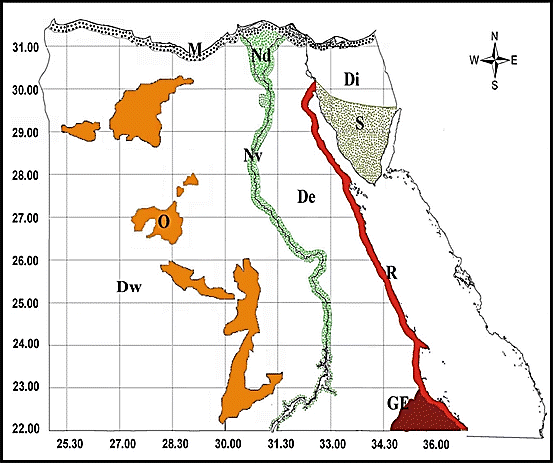
Egypt is part of North Africa Sahara, occupies the northeastern corner of Africa , covering a total area of over 1 million \(Km^2\) (about 1,019,600 \(Km^2\)) in the hyper arid regions. The Mediterranean Sea bound it to the north, Sudan to the south, Libya to the west, and the Gulf of Aqaba and the Red Sea to the east. It is situated between latitudes 22\(^o\) and 3\(^o\) north and lies in the temperate zone with less than a quarter of its area south of the Tropic of Cancer. Most of landmass is below 500 m above sea level, which limits potential diversity. About 95% of Egypt land is desert; the Western Desert constitutes one of the most extreme arid desert habitats in the world. Generally, the Nile Valley divides Egypt into two geomorphological regions: the eastern dissected plateau and the western flat expanse which form an extension of the Libyan Desert. The land to the east is divided geographically (Figure 1) into the Eastern Desert and the Peninsula of Sinai, separated by the Suez Gulf. The whole country forms part of the great desert belt that stretches from the Atlantic across the whole of North Africa through Arabia. It is a cross-road territory with its Mediterranean front connecting it with Europe with which it has had biotic exchanges during the glacials and the interglacial. Two highway corridors join Egypt with tropical Africa and beyond: the Nile Valley and the basin of the Red Sea. The Sinai Peninsula is the bridge between Africa and Asia.
Egypt is characterized by hot dry (almost scarce rain climate). Average annual rainfall over the whole country is only about 10 mm. Even along the narrow northern strip of the Mediterranean coastal land where most of the rain occurs, average annual rainfall is usually less than 150 mm, and decreases very rapidly inland (southwards). till it reaches 30 mm at Cairo. Further to the south, rain decreases reaching 3 mm or even less.
The scarcity of rainfall accounts for the fact that the greater part of the country is barren and desolate desert. In Egypt, desert vegetation is by far the most important and characteristic type of the natural plant life. It covers vast areas and is formed mainly of xerophytic shrubs and subshrubs. Monod (1954) recognized two types of desert vegetation, namely contracted and diffuse. Both types refer to permanent vegetation which can be accompanied by ephemeral (or annual). (Kassas, 1966, 1971) added a third type as “accidental vegetation” where precipitation is so low and falls so irregularly that no permanent vegetation exists. It occurs mainly as contracted patches in runnels, shallow depressions, hollows, wadis, and on old dunes with coarse sand. Accidental vegetation consists of species which are able to perform an annual life cycle: potential annuals (Haines, 1951), or potential perennials (Bornkamm, 1987), but can likewise continue grow as long as water persists in the soil. Thomas (1988) identified these plants as those with episodic growth strategies linked to immediate water availability. Recently, Springuel (1997) classified the accidental vegetation in south-eastern Egypt into three groups:
- runoff-dependent vegetation in the main wadi channels;
- run-on-dependent vegetation of playa formation; and
- rain-dependent vegetation on levelled plains of sand sheets.
The western coastal desert of Egypt and its hinterland is renowned by its wealth of natural resources. This region has been a point of attraction for development projects due to this richness in natural resources, fine location, and good weather. Most of the north Western Desert falls in the arid region except the coastal strip. Water resources are scarce and variable. As a result local community has developed a wide range of strategies for managing water resources in this region. Traditionally, they move for water, pasture and croplands, based on the rainfall pattern. After being sedentary, together with population growth, overuse of water resources, over grazing and uprooting of indigenous vegetation. Climate changes, and other political and social forces, there has been an increased pressure on land resources that affected its performance and provision of goods and services.
One of the most common forms of land use in the Western Mediterranean coastal region of Egypt is animal husbandry. Its contribution largely to the livelihood of Bedouin increases from Alexandria to the westward direction. Grazing material and fire-wood as energy sources are two major basic needs of the inhabitants of the western desert of Egypt. The Western Mediterranean Desert land is one of the richest phytogeographical region in Egypt for natural vegetation because of its relatively good rainfall. The natural vegetation includes many species of annuals, mostly herbs and a few grasses, perennial herbs, shrubs, sub-shrubs, and a few trees. These species represent 50% of the total flora of Egypt. The botanical composition is spatially heterogeneous depending on soil fertility, topography, and climatological conditions but with sub-shrubs dominating the vegetation (Ayyad & Ghabbour, 1977).
The total area of the rangeland is about 1.5 million hectares. Number of animals per folks varies among the Bedouin, and between regions. Average herd size is about 200 head of sheep and 60 head of goats, may be reaches to 300 heads (Aboul-Naga, Amo, Abdel-Aal, Hassan, & Shafie, 2023). The total number of animals which graze the rangelands is about 1.5 million head, therefore the average stocking rate is one head/ha. (Heneidy, 1992). There is no consistent range management strategy in control of the grazing season in the area, which varies mainly with climatic condition, availability of watering points and supplementary feed. In recent years reclamation and cultivation of desert areas in Egypt became a necessity. The coastal Mediterranean semi-arid stripe and the inland new valley areas are promising fields for such a purpose for the Bedouin communities in the rural area of the hot dry Coastal Zone of Western Desert (CZWD), Egypt
Raising sheep and goats is the main socioeconomic activity and source of income in rural areas (Alary et al., 2014). The livestock population (Figure 2) was estimated at 472 thousand heads in 2017 (MALR, 2018), mainly from sheep and goats, in addition to 18.3 thousand camels and 8.7 thousand cattle. The statistics indicated that the number of sheep and goats increases significantly in the good rainy years and decreases in the drought ones. Their population reached 495 thousand heads in 1995 (235 mm rainfall) and declined to 370 thousand heads in 2015 (62 mm rainfall).
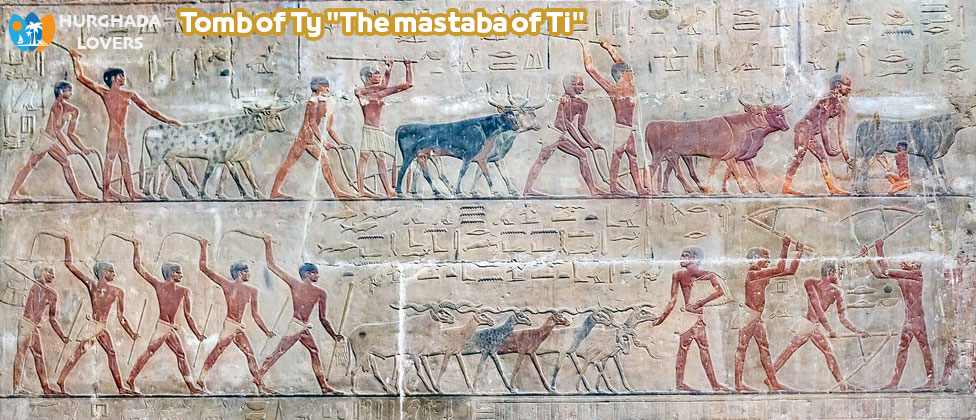
The role of small ruminants differs accordingly to the agro-ecological region. In the dry rainfed region (West), flock size decreased from 244 to 152 heads, over the drought period from 1995 to 2011, where it is increase from 161 to 234 in the new reclaimed lands (East), with the availability of green fodder and crop residuals. The animal reproductive performance as lamb born/ewe/year differs with the agro-ecological region being better in the new reclaimed lands. In the rainfed region, breeders have developed different adaptive mechanisms such as, decreasing flock size, raising more goats, relying more on concentrate feeding and early marketing of their lambs/kids. Migration of family members to agro-pastoral and urban areas was another social coping mechanism to the long drought. Long drought duration have induced detectable diversification of farming activities in the area.
Proposed areas for development Agro-Pastoral system in Egypt
Coastal Zone of Western Desert (CZWD) is an agro -pastoral area , extends from Alexandria East to the Libyan border west for about 500 km. The proposed area has two integrated sub-regions: the rain-fed zone extends from Saloum west to Debaa east and is characterized by pastoral extensive livestock system on natural ranges, with some cropping activity(barley sand fruit trees ) . It is hot dry with low erratic rainfall (≤ 140 mm) . The other sub-region is the eastern part from Alameen to Nub aria it is newly reclaimed area ( since the seventies) cultivated by forages and strategic crops , irrigated mainly
by Hamam canal.
The inhabitants there are mainly Bedouin societies, following agro-pastoral livestock system (especially sheep and goats), with some other species (camels, and cattle) as the main source of their livelihood, food security and social prestige , beside rain fed barley and fruit trees as olives and figs. The prevailing livestock system on natural ranges, crop residues and some forages from the eastern region . This system is characterized by flock mobilization searching feed and water. Three types of production systems can be identified in the area according to, distance from the Nile river:
- coastal strip extends from the seashore, with around 150 mm annual rainfall with some orchards and vegetables cultivation;
- land grazing/cropping area lies between, constitutes of 22% of the total land, with 100-150 mm annual rainfall. It is grazing area for sheep and goats, and rain fed barley; and
- the cultivated area east with irrigated forages, and cash crop.
During January to March, the animals graze on natural pastures; from March to June they move to barley areas after harvesting to graze crop residues, natural ranges cover lower percentages of the stocks requirements., from July to September flocks move east toward the cultivated and new reclaimed areas to fed perennials plants. During the long summer season, animals depend on supplementary concentrates feeding and the Over the last decade, the grazing months reduced to 3-4 months. The area has faced a long drought periods with low erratic rainfall of less than 100 mm. This long drought period has affected farming systems and household livelihood especially in the rain -fed areas with its negative effects on livestock and cropping system. With of reduction in grazing land areas, the area suffers from overstocked, therefore the breeders depend on feedstuffs
from outside the area as supplementary feeding and started to move their flocks eastward to the cultivated area for stubble grazing and other available feed resources.
Prevailed sheep and goats breeds
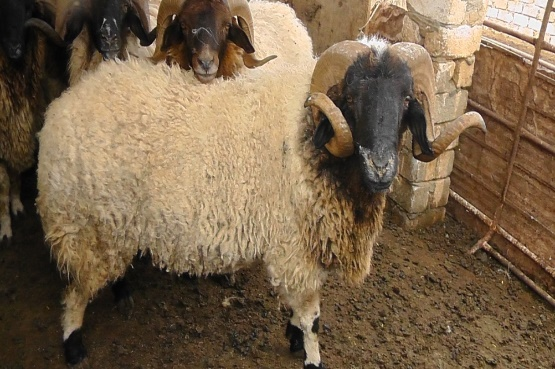
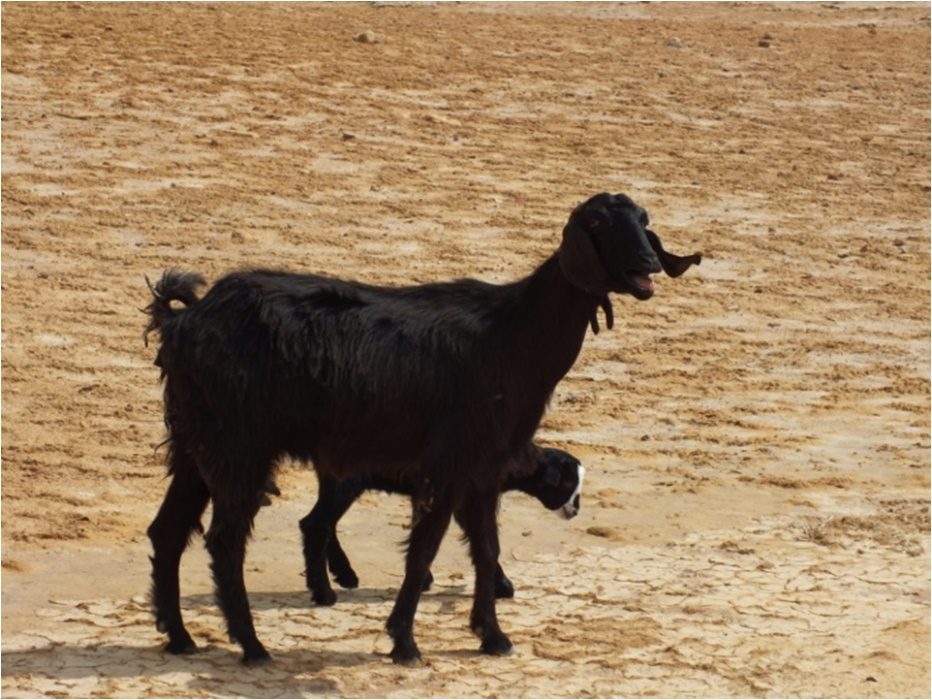
Barki sheep (Figure 3) and goats (Figure 4) are the dominated breeds in the CZWD. The Bedouin population are raising Barki sheep and goats under extensive system to produce lambs and kids beside wool, hides and milk. There is a high domestic demand for mutton and goat meat, as most of sheep and goats are sold as live young lambs and kids for meat.
Barki sheep
Barki sheep (Figure 3) named after Barka Libyan province; it is also called Desert sheep. It is small in size, leany, with long neck and legs; head is small with straight profile. Rams are horned, while ewes are often polled. Horns vary in shape, but mostly turn backward and downward. The fat-tail is a triangular in shape with a twisted end. Ears are semi pendulous and medium size. Color is white with the head and legs ranging from brown to black. Sometimes, dark spots are found on the body and around the eyes; occasionally, animals are entirely white. Fleece is open of coarse wool. The breed is hardy, well adaptedto the desert conditions and has distinct mothering ability.
Barki goats
Barki goats (Figure 4) named after Barki sheep and called Arabi goats. The head is small with straight profile. Males and most of females have horns, ears are medium and drooping. Colour is mainly black with white spots on the head and body, other colours are also found. The body is covered with long hair. Does are bred throughout the year and two kid crops per year are common. It is known to be hardy animals, well adapted to the harsh environmental conditions and scarce vegetation of the desert. Fertility is good , with good twinning rat (160%). Barki does produce relatively low amount of milk production, (less than 100 kg during a lactation period of 4-5 months)
Animal Production Research Institute
The Animal Production Research Institute (APRI) dates back to 1908 as an independent Animal Breeding Department, its responsibilities were research and development activities related to different livestock species. Since 1939, it has been affiliated to Ministry of Agriculture as Animal and Poultry Breeding Department. In the seventies Agricultural Research Canter (ARC) was formed, and APRI became one of its research institutes. The mission of the institute are:
- contribute to raising per capita animal production as essential content for national feed security, and work on raising the living standard of the farmers especially small breeders;
- empowering rural women and strengthen integration with plant production; and
- optimum use of natural resources of land and water so as to maintain better environmental conditions.